Posts

Professionalization of the Artisanal Gold Mining Sector
Image
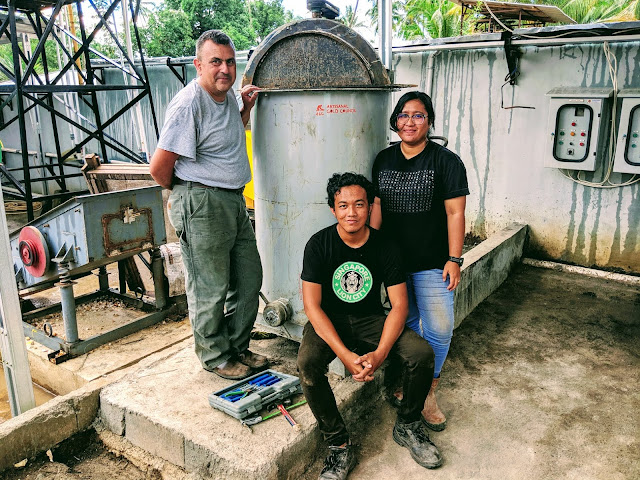
Three professional mining engineers that have chosen to make careers in the artisanal gold mining sector and are busy helping to improve it onsite in Indonesia, 2019; left to right: Sixto Aguero, Abrar Ridhollah, and Yolanda Hantari. When asked what the Artisanal Gold Council’s mission is and about my own vision for the improvement of the artisanal gold mining sector, I explain that it is mainly two simple things. First, it is about the improvement of the artisanal gold mining sector writ large so that it can better perform its role in delivering development to the rural poor, essentially helping the sector to deliver the UN’s sustainable development goals (SDGs). And secondly, that the approach we use to do this, is professionalization, that we aim to professionalize the artisanal gold mining sector. In fact, professionalization of the artisanal and small-scale gold mining sector (ASGM) is largely what the Artisanal Gold Council does. To draw attention to this approach, I ...

The Media's demonization of the Artisanal Gold Mining sector isn't helping

Image
The Miami Herald in 2018 and now Buzzfeed and the NYT in 2019 have published, once again, the typical easy story on alluvial gold mining in the Amazon: The very simplistic and oft repeated "mining is bad" story. They cast a pall over any and all that are involved in artisanal mining. What they report is not entirely untrue, but it is far from representative of the vast world of artisanal mining in the 82 countries where it occurs. Worse though, is that stories like this damage the fragile peace that has been obtained between governments and artisanal miners the world over during the last decade. The peace has been largely brokered by the UN and the OECD with their initiatives on mercury pollution (the Minamata Convention) and transparency (Due Diligence in the Gold Supply Chain). Mostly what the UN and OECD have championed though, is recognition of the huge development opportunity the artisanal gold mining sector represents. Helping the sector become a responsible one c...

National Endowments of Artisanal Gold - what can be done with them?

Image
As the price of gold rises, what opportunities are there for countries with artisanal gold mining sectors? Here I am not talking about the miners but rather the countries that are endowed with deposits of artisanal gold. This is an interesting topic in the new context of rising gold prices and the emerging Artisanal and Small Scale Gold Mining sector (ASGM). The potential role of ASGM gold in the monetary system and the geopolitics behind central bank reserves is worth a thought. Most of the major central banks have been accumulating gold over the last decade, with some like Russia and China doing so aggressively. So how does the artisanal gold sector fit in? It does somehow!  Artisanal gold represents US$20 billion per year of "reserve currency" (~500 tonnes) flowing out of 82 host countries. Its movements are not yet well tracked. If governments were able to collect a normal level of royalty (let alone corporate taxes) then they would have a "gold stream...

What does 1500$ gold mean to the Artisanal Gold Mining Sector?

Image
What happens to the Artisanal and Small Scale Gold Mining sector (ASGM) when gold moves from 1200$ to 1500$ in less than a year? That is a 20% increase. Its nature (largely unregulated subsistence labour) means it can respond quickly relative to the large scale industrial gold mining sector. Many short term needs are met overnight and that ripples down. That could mean 20% more people could be employed in ASGM, which would mean 2 million more miners globally if the 10 million miners in 80 countries estimate is used as a basis. 10 million miners is the lowest estimate in the literature today. Or it could mean the existing 10 million people have 20% more free cash. Either way it is a 4 to 5 billion USD windfall to the economy of the ASGM sector. That is about 8 million new Chinese motorcycles. Or its a mix of new motorcycles, more people, and more community wealth. It is about 3% of the global development assistance budget from all countries for all purposes. Now obvious...

ASGM and Public Health

Image
The AGC helps miners improve their productivity and helps them to comply with minimal health, safety and environmental standards; this can facilitate the formalisation of their livelihoods, allowing them to increase their income in a safer way for both them and their communities. One of the ways in which the AGC does this is through educating health workers and miners on the risks of certain aspects of ASGM and providing ways to mitigate these risks, while at the same time as training miners on how to process their gold in a safer way, largely by using less or no mercury.   For the vast majority of the millions of people who work in ASGM worldwide, labor conditions are substandard. There are multiple health risk factors that affect these populations; for example, acute accidents and injuries are common and chronic conditions resulting from exposure to toxins are prevalent, although rarely quantified. Moreover, ASGM communities typically have little to no access to education, ...

Mercury Use in the Guinean ASGM Sector

Image
The ASGM sector in Guinea is vibrant, growing, and ripe with opportunity. If properly managed, it could create a much needed West African example of best practices in ASGM. The Artisanal Gold Council (AGC) is engaged in a United Stated Department of State (USDoS) funded project focused on reducing mercury use in Francophone West Africa. The project currently is active in Senegal, Burkina Faso, and Guinea. Here we will discuss the interesting and unique approach to mercury use in Guinea, which differs from common practices seen in surrounding West African countries. Traditional gold concentration process using a calabash pan While traditional gold mining has occurred for centuries in Guinea, there has been significant growth in modern ASGM in recent years, including the introduction of mercury to amalgamate gold.  The Guinean ASGM sector is less developed (delayed) compared with the longer standing activities of surrounding countries (for example in Mali), and this...

Mercury Free Gold Processing

Image
Using mercury amalgamation to separate gold particles from ore is not only dangerous to the health and environment of miners and their families but it is also inefficient. Recovery is an important aspect of efficiency in mining. It is a measurement of how much gold is split from the ore; how much gold goes to concentrate and how much goes to tailings. In Cholito, Peru at our mercury free processing and training centre, the initial rate of recovery that miners were able to extract through mercury amalgamation was 30%-40%. This means almost half of their gold was lost to tailings! A waste of the resource at a great harm to the planet.   (In comparison, most large scale gold mines maintain a recovery of over 98%.) One of the most prominent roles of the AGC is to assist miners to improve their processing techniques and eliminate their use of mercury. The mercury free processing and training systems installed by the AGC are intuitive and easy to use since they are composed of te...

Health and Environmental Issues and Solutions

Image
By advancing technology, business practices, governance and policy, the Artisanal Gold Council helps to improve the environment and health of the millions of people involved in ASGM worldwide. The three pillar approach of the AGC Mercury use, water consumption, and dust and wastewater management are the main environmental and health concerns associated with ASGM. At many artisanal gold mining sites, miners and their families are susceptible to inhaling both mercury vapour and silica dust, which can cause serious and often irreversible health problems.  Although the environmental and health issues in ASGM are of serious concern, both can easily be mitigated through education, improved processes and best practices A ball mill with wet processing keeps silica dust down and helps to recycle water used. To alleviate health hazards, the AGC: ·                 Provid...

Minamata and NAPs

Image
The Minamata Convention on Mercury, adopted in 2013, is a world-wide treaty aimed at protecting human health and the environment from mercury’s harmful effects. As the artisanal and small-scale gold mining (ASGM) sector is a major anthropogenic source of mercury release and environmental pollution, a specific article targets the sector in the treaty; as per Article 7, countries that are part of the Convention and determine that ASGM and processing are “more than insignificant” in their territory shall develop a National Action Plan (NAP) to reduce, and where feasible, eliminate the use of mercury and mercury compounds in the sector. The Artisanal Gold Council (AGC) is helping countries, such as Burkina Faso, Ecuador, Gabon, Laos PDR, Mali, Peru and Senegal, to elaborate their NAP, in collaboration with the national governments, the Global Environment Facility (GEF), the United Nations Environment (UN Environment) and the United Nations Industrial Development Organization (U...

Spring Check Up – Looking Bright!

Image
✅ 10 Countries; ✅ 5 Languages; ✅ Millions of rural poor positively impacted with better health, safety and economic conditions. This February is shaping up to be one of the most influential months in AGC’s history. And we are rolling into the Spring with more momentum than ever.  

SMS System Helps Miners Get Better Value for Their Gold

Image
Artisanal gold miners often operate in remote areas where they work long and hard extracting and processing ore to produce small batches of gold. This gold is then sold to a local gold buyer; however, because the price of gold fluctuates daily in international markets, one of the challenges for artisanal miners in these remote areas is having access to the daily spot price of gold in order to ensure they are receiving a fair price.

Artisanal Small-Scale Gold Mining and Canada’s Post 2015 Development Priorities by Dr. Kevin Telmer

Canada and Artisanal Mining Artisanal Small Scale Gold Mining (ASGM), recognized as a huge development opportunity in 70+ countries by the world's international institutions, is playing a vital role in eradicating poverty for the world’s poorest and most vulnerable. It is a remarkable sector that deeply touches Canada’s history and development. Artisanal mining played a significant role in creating wealth and economic diversity in early Canadian history (~1850 - 1930), and the evolution of that sector into Canada’s modern natural resources industry tells a good part of the story of the evolution of Canadian governance systems.  

Improving Occupational Health for Artisanal Miners in Peru: Monitoring and reducing mercury and respirable silica in ASGM.

Image
The Artisanal Gold Council works to improve the health of miners worldwide. As part of ‘ Mejorando la Pequeña Minería Artesanal de oro’  (MEJORO), our 5 year project in Peru, we are working with local miners to improve practices and reduce environmental and health impacts at processing sites. Mercury vapour and respirable silica dust exposure have previously been highlighted as key health concerns within the Artisanal and Small-Scale Gold Mining (ASGM) sector, and the Minamata Convention specifically targets the elimination of mercury use in the sector. Our integrated approach to improving occupational health not only seeks to raise awareness on health issues in ASGM, but also to provide practical and accessible alternatives and the necessary training and resources to assist artisanal miners in improving their work environment.  

Calculating Karats

Image
The importance of determining gold purity   is profoundly understood by the world’s refineries and is the basis for all final gold trade. However, in the field, the actual quantity of gold in a piece of dore (raw gold with some impurities) is difficult to ascertain to anywhere near the degree used by the world’s refineries; accuracy can be off by as much as 10 or 15% in the artisanal mining sector. Purity of gold is most commonly expressed in either percentage (%), as in “five nines gold” being 99.999% gold, or in karats, as in 24 karat gold being more than 99.95% pure. Gold considered London Good Delivered is 99.5%.

The 4th Meeting of Artisanal Miners of Chaparra

Image
Located in the Chaparra District of the Province of Caraveli, in the Arequipa region of Peru, Chaparra is a small town full of warm people. Their main income is gold mining; many   Chaparrans have dedicated multiple generations to this sector. On Sunday June 12, 2016, the 4th Meeting of Artisanal Miners of Chaparra was held within the activities to celebrate the month of the 199 th  Anniversary of the Chaparra District.

International Water Day

Image
This year's UN World Water Day focuses attention on the close relationship between water and jobs.  This is particularly true for the  Artisanal and Small-Scale Gold Mining (ASGM) sector where, for more than 15 million workers,  water plays an integral part in processing operations, but also has important linkages to environmental and human health.

Artisanal mining and the SDGs

Image
The September fanfare of agreeing to 17 Sustainable Development Goals (SDGs) is over. It’s 2016, and the clock has started ticking. A starting point to realising the SDGs requires an understanding of where and how our work intersects with them. The mining sector - large, medium, small and artisanal – is no exception. How the artisanal sector in particular unfolds and develops in the next 15 years will affect our collective ability to reach the SDGs.  While developments in Artisanal and Small Scale Gold Mining (ASGM) can be linked to all of the SDGs, 8 of the most pertinent ones are discussed below, reflecting on what this means for the sector and for the Artisanal Gold Council (AGC).

Zero Mercury Working Group Press Release

Image
                                                                                                                           Press release Despite progress, global mercury agreement undermined by uncontrolled production and trade Groups ask governments to fast track ratification, early implementation of Minamata Treaty Amman, Jordan, 9 March 2016 —Commitments toward stronger global mercury controls are being hampered by illegal, unreported and unregulated mercury production and trade, an international NGO coalition revealed today on the eve of a UN mercury treaty meeting in Jordan. The Zero Mercury Working Group (ZMWG), of which the AGC is a member, said...